Marvel Rivals Hardstuck Claim Under Review
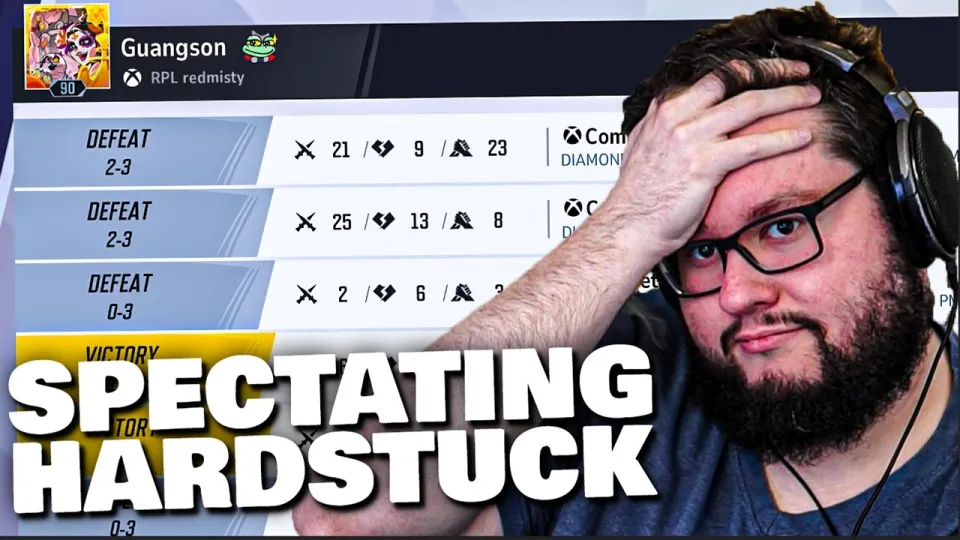
Video: I Spectated Someone Who Claimed To Be Hardstuck In Marvel Rivals
Want articles like this for your own video to promote it on YouTube and Google? Order them through the Telegram bot @sat_sit_bot. Articles with your video embedded are written and posted by the bot itself — on popular topical sites (no ads). Free trial — 50 articles.
· based on the channel Flats
Key takeaways
- A Marvel Rivals player in Grandmaster claimed his teammates were the reason he could not climb.
- The reviewed player mained Spider-Man and played Cloak & Dagger as "Dagger," rarely switching to Cloak.
- He also played Rocket with a no-damage approach, which the review argued damages the hero's real value.
- The spectate showed basic errors: walking past a health pack while looking for one, and an invisibility flank that achieved nothing.
- The reviewer, Flats, is a former Overwatch coach who now breaks down Marvel Rivals ranked gameplay on Twitch.
A Marvel Rivals player who insisted he was hardstuck in Grandmaster got his matches reviewed live, and the footage pointed in the opposite direction from his story: the teammates were not the problem. In the breakdown, coach and streamer Flats spectated the player's games and found a Grandmaster-ranked Dagger who almost never used Cloak, a Rocket played with no damage, and basic map awareness errors such as walking past a health pack while searching for one. The full live sessions and coaching streams are on Flats' Twitch channel.
What "hardstuck" actually looked like in the review
The core claim was that teammates were holding the player back in Grandmaster, one of Marvel Rivals' top competitive tiers. The spectate footage did not support it. The player's decisions repeated the same mistakes across matches, and those mistakes were independent of who else was on the team.
Key observations from the review:
- The player called himself a Spider-Man main, and the review noted that the flank-heavy habits carried over badly to support heroes.
- On Cloak & Dagger he stayed in Dagger form almost the entire match, using the healing side of the kit and rarely swapping to Cloak for the damage and escape tools.
- On Rocket he avoided dealing damage, a style the review argued actively hurts the hero, whose gun and mobility are a large part of his value.
- He walked past a health pack while visibly looking for a health pack, a moment that became the most-quoted clip of the stream.
- An invisibility play that was supposed to be a flank ended with no pick, no pressure and no follow-up.
Why the Dagger-only habit is a real problem
Cloak & Dagger is one of the few Marvel Rivals heroes built around a hard swap between two kits, and playing only the healing half throws away roughly half the character. Dagger covers sustained healing, the healing wall and the blinding light field. Cloak brings the damage beam, the terror cape that blinds enemies, and the phased escape that lets the pair reposition out of danger. A player who never swaps is effectively running a support with no escape tool and no way to finish a low-health target. In a Grandmaster lobby, where enemy duelists expect to be punished for overextending, that passivity is a measurable loss of value every fight.
The no-damage Rocket debate
The Rocket segment touched a long-running argument in the Marvel Rivals community. Rocket's healing orb output is strong, but his minigun deals real damage at close range and his kit rewards aggressive repositioning. A support who never fires is not a pacifist build, it is a hero played at partial capacity. The review's point was not that Rocket should be a duelist, but that refusing to shoot removes pressure, removes the threat that keeps enemy divers honest, and turns a flexible strategist into a heal-bot.
Ego, accountability and the ranked ladder
What made the review land was the gap between confidence and results. The player arrived certain that the matchmaker and his teammates were the obstacle, and the footage showed unresolved fundamentals. That pattern is common in team-based hero shooters: losses get blamed on the random teammates, and the repeatable personal errors never get fixed. The review inverted the claim. If anything, the teammates had been carrying a player who was not pulling his weight at that rank, which is the opposite of the story the player told.
Typical viewer questions about hardstuck players
Spectate reviews like this one generate the same doubts every time, and they are worth answering directly.
- Is Grandmaster in Marvel Rivals actually high? It sits near the top of the ranked ladder, so a Grandmaster player is expected to know map layouts, health pack locations and hero swap timings. Basic awareness errors stand out more at that level, not less.
- Can teammates really hold you back? Over a handful of games, yes. Over hundreds, the only constant is you. A negative win rate across a large sample points to personal decisions, not matchmaking luck.
- Does one-tricking a hero cause this? One-tricking is fine if the player learns the full kit. The problem here was playing a two-form hero in one form, which is not one-tricking, it is half a hero.
- Why do players with big egos climb anyway? In Marvel Rivals, strong healing output can mask poor decisions up to a point, which is exactly why the flaws only become visible when someone watches the replay frame by frame.
All links from the breakdown
- Live streams and coaching: https://www.twitch.tv/flats
- Community Discord: https://discord.gg/flats
- Twitter/X: https://twitter.com/Flats_Ow
- TikTok: https://www.tiktok.com/@flats_ow
- Facebook: https://www.facebook.com/FlatsTTV
Final takeaway
The Marvel Rivals hardstuck claim in this spectate review collapsed under its own footage: a Grandmaster Dagger who never became Cloak, a Rocket who refused to shoot, and a player who could not find a health pack he had just walked past. Flats, a former Overwatch coach turned Marvel Rivals analyst, built the segment around evidence rather than insults, which is why the clips travelled so far. The lesson for anyone stuck in ranked is unglamorous: record your games, watch your own deaths, and learn the half of the kit you are ignoring. For more live spectates and ranked breakdowns, watch Flats on Twitch.
Questions & answers
What does "hardstuck" mean in Marvel Rivals?
Hardstuck describes a player whose rank stops moving despite playing many matches. It is usually blamed on teammates or matchmaking, but a large sample of games with a negative win rate typically points to repeatable personal mistakes in positioning, hero choice or kit usage.
Why is playing only Dagger on Cloak & Dagger considered bad?
Dagger provides healing and utility, while Cloak brings damage, a blinding debuff and a phased escape. A player who never swaps loses the escape tool and the ability to finish low-health targets, so the hero is effectively played at half strength in high-rank lobbies.
Is no-damage Rocket a viable strategy?
Rocket's healing is strong, but his minigun and mobility make him a flexible strategist rather than a pure heal-bot. Refusing to deal damage removes pressure from enemy divers and wastes part of the kit, which is why high-level players treat the no-damage style as a handicap.
Can teammates really keep you from ranking up?
In a short stretch of games, yes, random teammates can cost matches. Over a long season the only constant variable is your own play, so climbing depends on fixing awareness errors such as missing health packs, poor ult timing and refusing to use a hero's full kit.
Source: I Spectated Someone Who Claimed To Be Hardstuck In Marvel Rivals · Markdown version